I Watched a Film and Felt a Controller in My Hands
A game developer walked out of Na Hong-jin's 'Hope' and made a 21-second TPS gameplay video on a park bench with nothing but a phone. 1.3 million views, a spot on SBS evening news. We asked AIROMIX CEO Ryu Ki-deok how he did it.
Most people who walk out of 'Hope' write down what they thought of it. Ryu Ki-deok left the theater and made a 21-second gameplay video instead, and it has since passed 1.3 million views on Instagram.
In a ruined village alley the protagonist rolls, tucks behind a truck, and fires a shotgun. A reticle sits at the center of the frame and a health bar drains in the bottom left. SBS covered the video on its evening news.
Ryu is the CEO of AIROMIX, was a vice president at Wemade, and spent more than a decade as a game developer before that, and he made this particular video on the Sunday afternoon he came out of the theater, sitting on a park bench while his kids ran around, working from a phone and finishing barely an hour after the first prompt.
Entertech Review sat down with him.
A controller in my hands, in a movie theater
LIM. What made you think about games in the middle of a film?
Ryu. Watching the first half in the theater, it felt like I had a controller in my hands. The director pins the camera right behind Beom-seok, the character Hwang Jung-min plays, and threats keep bursting in from outside the frame while Beom-seok just stays there, terrified. He reads less like an action hero charging at a monster and more like an ordinary working cop who is scared and still refuses to back off.
LIM. Beom-seok never actually rolls or takes cover in the film, though.
Ryu. He doesn't. But the over-the-shoulder view, the narrow alley, the threat that jumps in from nowhere. I was looking at the grammar of games I have poured hundreds of hours into, right there on the screen. If that scene were a game, the player holding the controller would have rolled instead of Beom-seok. Taken cover, aimed, fired back.
LIM. Why put that feeling into video rather than writing about it?
Ryu. I have been writing film reviews since I was a kid, back when I posted them on dial-up bulletin boards. But I had been thinking that long text reviews do not carry the weight they used to. And after a decade of building games that instinct woke up in the theater alongside the writing one. So I decided to just show the thing I was imagining. "If the first half of this film were a game, this is how it would play." I turned that one sentence into 21 seconds.
LIM. So it is not a recreation of the film.
Ryu. Not at all. The action in the video is closer to fan work rewritten through a game developer's imagination. When I posted it on Instagram I even titled it "'Hope' TPS game demo."
A park bench, one phone, one hour
LIM. The setup is unusual. Just a phone?
Ryu. It was the Sunday afternoon I came out of the film. My kids were running around the park and I sat on a bench and pulled out my phone. Once you connect the Higgsfield MCP to the Claude app, a single chat window handles prompt design, image upload, video generation, and checking the result. There was no reason to move anywhere.
LIM. Walk me through the order.
Ryu. First I talk with Claude to work out the structure of a one-take action scene. Then I upload three reference images, the creature, the background, and the protagonist, and generate straight from the chat with Seedance 2.0. If something looks off I just say so. Claude rewrites the prompt and runs it again.
LIM. What about resolution?
Ryu. I ran drafts fast at 480p. Only once the scene held did I re-render at high resolution. The final cut is two takes joined together, 21 seconds.
Three reference images carry the whole thing
LIM. You said three reference images were the backbone.
Ryu. I built it from references alone, with no starting frame. All three came out of GPT Image 2.
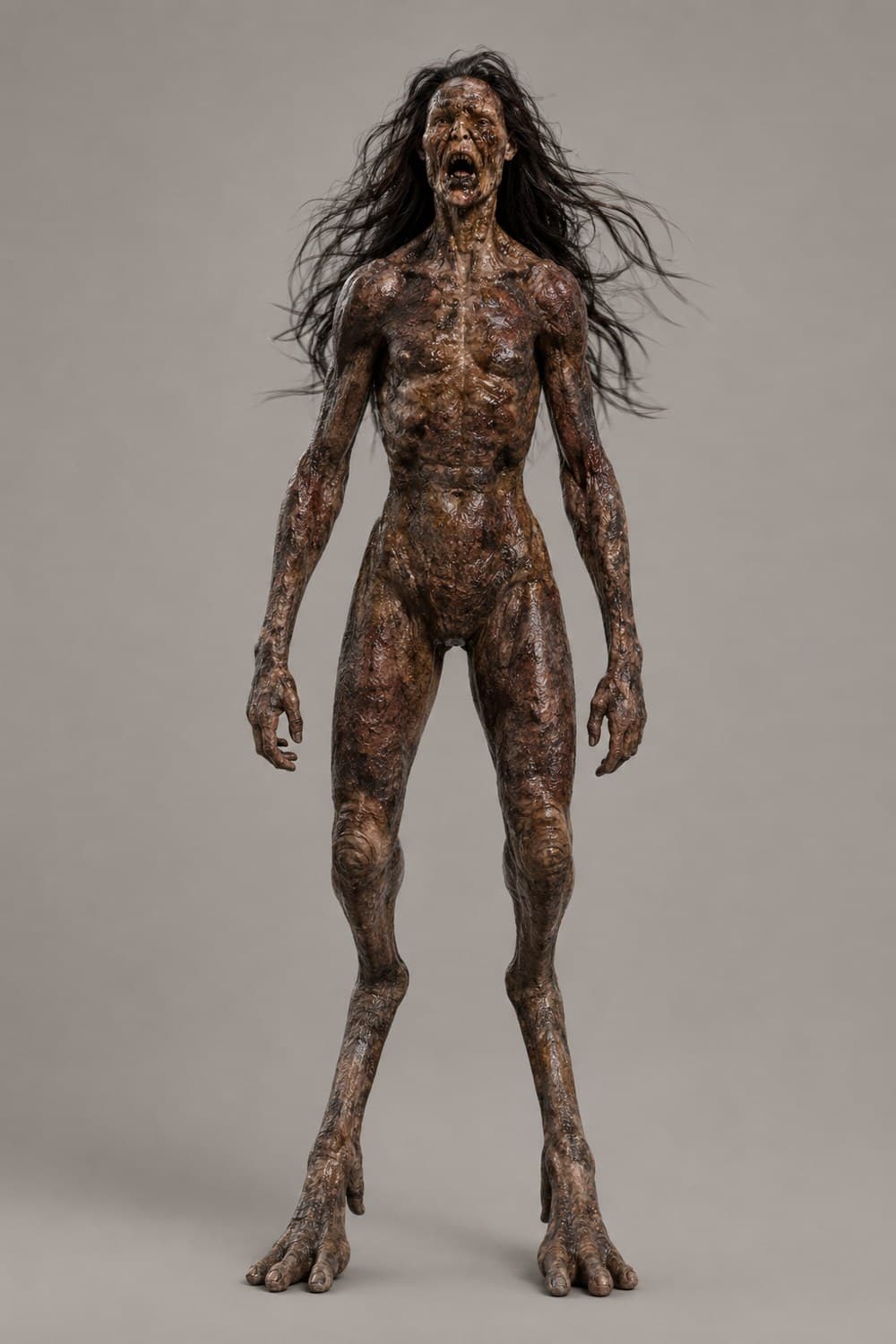
The creature came from the impression the first monster in the film, Bamigir, left on me. I redrew it as a gaunt body with long black hair. Rather than copying what is in the film, I redesigned the first impression I got in the theater as a game boss. I made it a neutral full-body pose so it could be referenced from any angle.
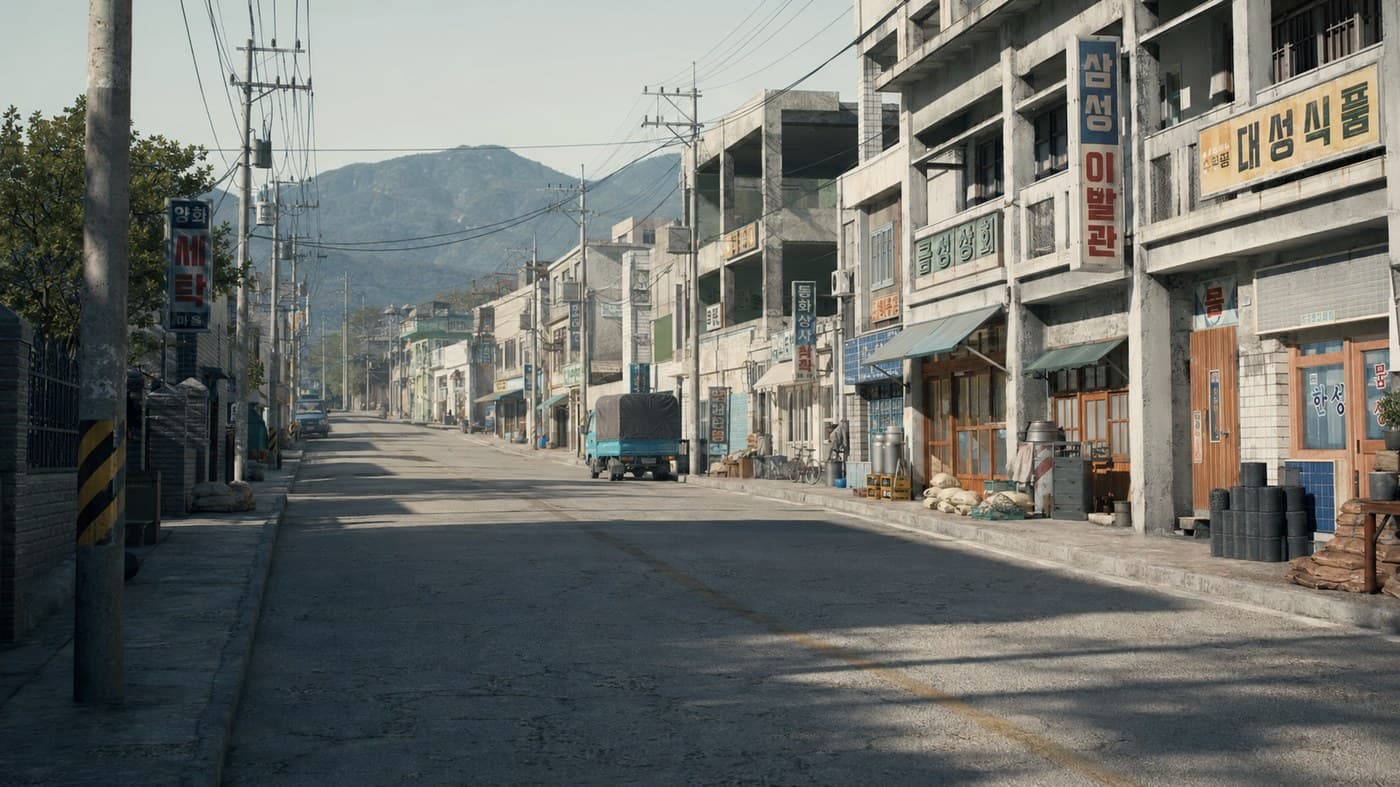
The background is a ruined 1980s Korean village street. Signage, utility poles, the clutter outside the shops, I locked all of it down at the image stage.
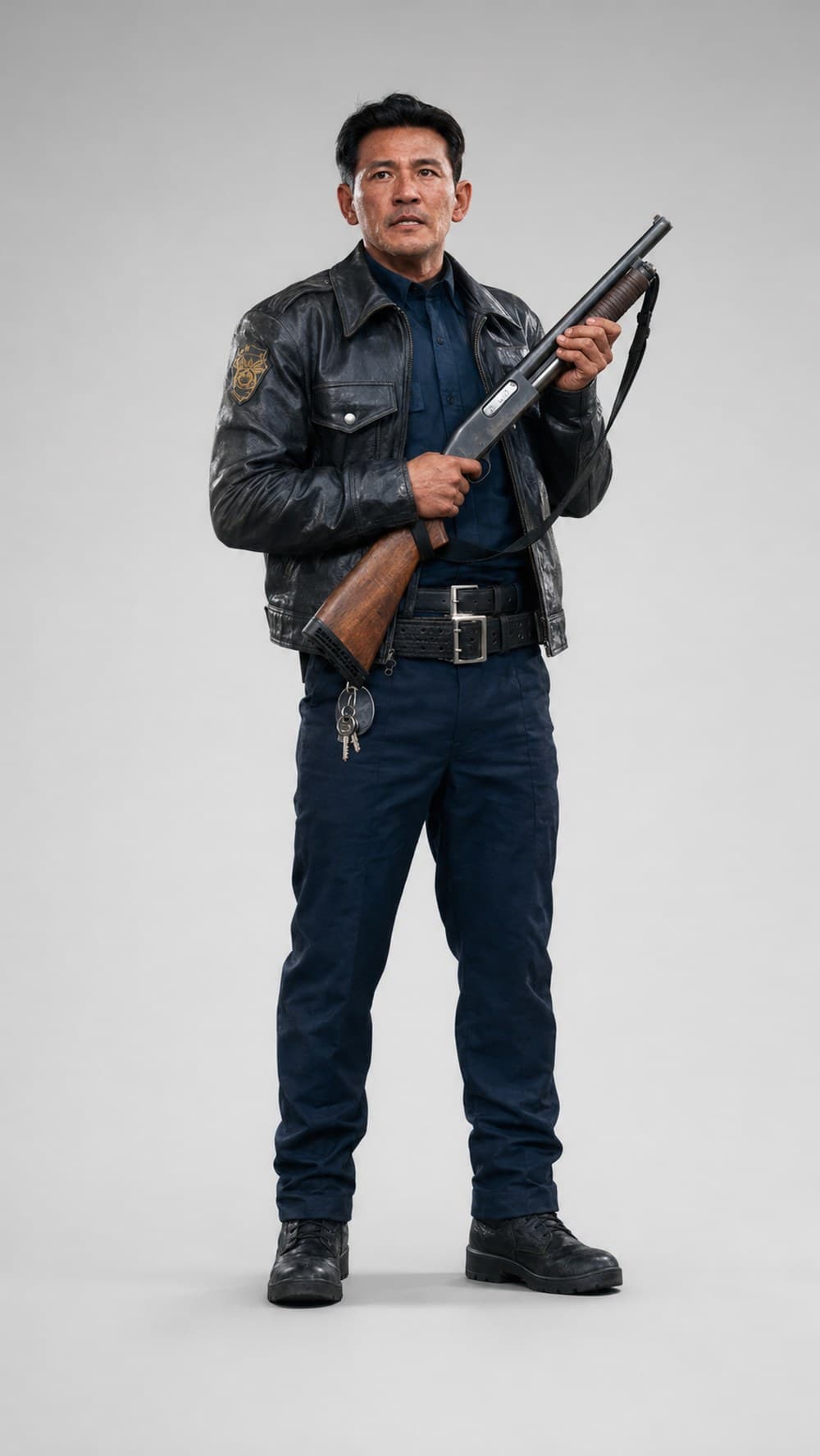
The protagonist is a full-body character sheet, a man in a leather jacket holding a shotgun.
LIM. The face and the silhouette never wobble across the 21 seconds.
Ryu. In the video prompt I pointed at each of the three images and kept repeating the condition, hold to this image. That is why the character's face and the creature's silhouette stayed put for the full 21 seconds and the period feel of the village held too.
Translating a film's feel into game grammar
LIM. What do you have to decide to move a film's feel into game grammar?
Ryu. Four things.
First, lock the viewpoint. The camera rides just behind the protagonist's right shoulder with no cuts. The controller-in-hand feeling comes out of exactly that viewpoint.
Second, add the game UI. A reticle at center, a health bar bottom left, an ammo count bottom right. The moment that small UI goes on, the viewer starts reading the scene as gameplay.
Third, design the boss fight. The creature lunges and claws when it gets close and throws bicycles and signage once the distance opens up. The protagonist rolls, tucks behind cover, and swaps the shotgun for a rifle while running. Those are all combat rules I gamified in my head. I sliced the time into four-second blocks and specified the creature's action, the protagonist's response, and the camera position separately for each block.
Fourth, set the texture. I asked for the look of a photoreal Unreal Engine game cinematic and told it to bring out light, dust, and material detail. That is also why I designed the creature's entrance as a collapsing building. Dust has to spread before light shafts show up in the air and the scene gets heavy.
Give it something to measure against, not a number
LIM. What gave you the most trouble?
Ryu. The size of the creature. I set it at three to four meters and had it smash through a wall, and it shrank to fit the hole and grew back once it was through. The AI had sized it against the hole.
LIM. How did you fix it?
Ryu. Instead of passing through a hole I had it bring the whole storefront down on the way out. And I added environmental reference lines.
Its shoulders are wider than the shopfront. Its head rises above the collapsed roofline.
Comparing it to nearby objects worked far better than writing a number. That was the biggest thing I learned on this one. In AI video, putting something in the scene to measure against beats writing the measurement down.
Where a review becomes creative work
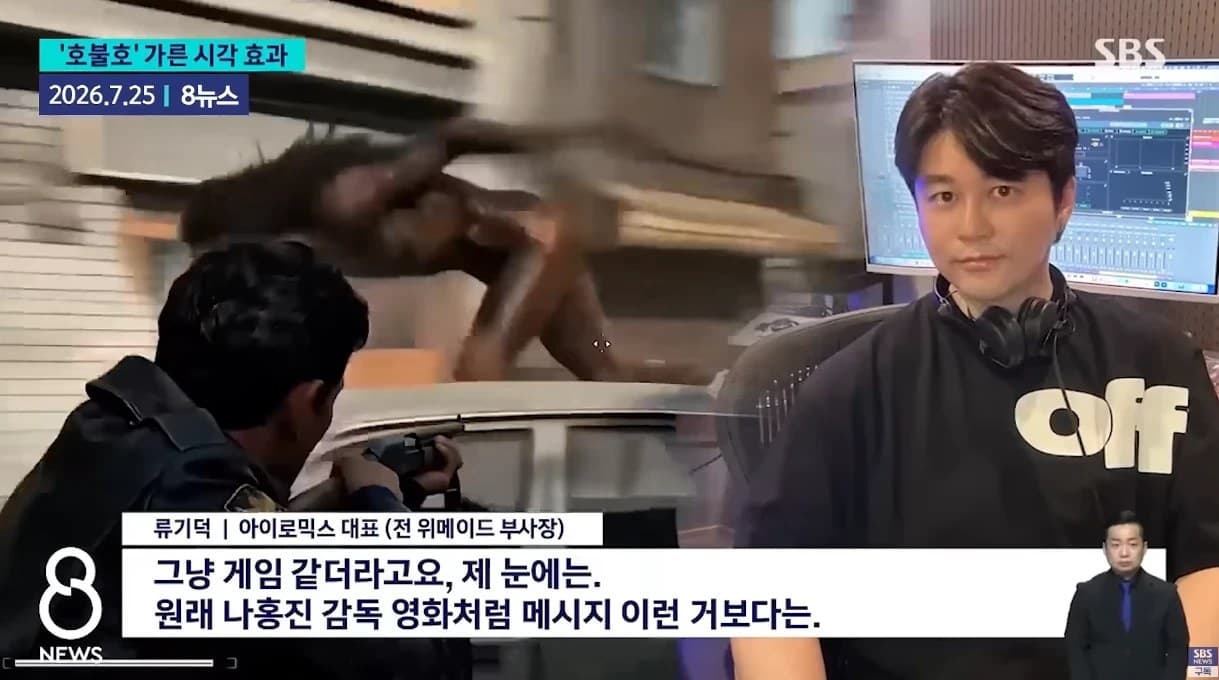
LIM. 1.3 million views and a broadcast news segment.
Ryu. The texture of the response interested me more than the number. The comments kept saying the game looked more fun than the film. Setting aside how good the film is, I take that to mean people read the game grammar that strongly.
LIM. Do you think the review format itself is changing?
Ryu. Film reviews belonged to writing for a long time and we carried what we got in the theater over into sentences, but now we can rebuild that feeling directly in a form close to it rather than translating it into prose. 'Hope' felt like a game to me, so I made a game video, and I made it on a park bench with my kids running around and nothing but a phone.
I felt like two old hobbies of mine finally met in one place. Building games and watching films and writing about them came together into one thing for the first time, on top of AI.
LIM. Anything to say to someone thinking of trying the same?
Ryu. More people who used to write reviews will start making things, and more of the audience will cross over to the production side. I hope this write-up is a small starting point.
Reporter's note: what practitioners can take from this
While writing this up I kept catching on that one hour. Had this gone out to a vendor, the quote would have carried storyboarding, character design, backgrounds, animation, and compositing, and the delivery would have been set in weeks. Ryu Ki-deok got through that pipeline in one pass, on a park bench, from a phone. Three things stand out for anyone working in this.
First, the same tools will not get anyone this result. Every tool Ryu used is available to everybody. Claude, Seedance, GPT Image all open the moment you register a card. Yet he knew before writing a single prompt that the camera has to sit behind the right shoulder for the controller feeling to survive, that the reticle and health bar are what make a viewer read the frame as gameplay, and that the timeline has to be cut into four-second blocks or the action falls apart. You only know that after a decade of making games. The cheaper AI makes the execution, the more the person deciding what to make is worth.
Second, he solved consistency with assets rather than prompts. Everyone runs into characters mutating between shots in AI video. Ryu locked three reference images first, with no starting frame, and pointed every prompt back at them. Instead of re-describing the face, the silhouette, and the period feel in text each time, he pinned them to images. Any team that has to reuse a character or a world would be faster building a reference set before a prompt template.
Third, do not write numbers, put something in frame to measure against. Three meters did nothing, and the AI shrank the creature to fit the hole. "Its shoulders are wider than the shopfront" worked. The model holds onto relationships between objects in a scene and loses absolute figures. The rule carries over to distance, speed, and brightness just as well. It is worth one line in any team's prompt guide.
One more thing worth noting. Ryu called this fan work rather than a recreation of the film. He drew the line himself, saying it is an impression he took away as an audience member and rewrote in his own grammar. With the copyright questions around AI-made work still unsettled, a maker naming that boundary first is worth borrowing.