The Fans Built It First
Fans made sped-up edits a trend, and the labels caught up by releasing them officially. Now the act of changing the music is itself becoming something fans pay for. What Hook, Suno and Spotify charge the fan, what they owe the rights holder and on what basis, and whose permission you need first to build the same thing in Korea.
For a while, the songs taking off on TikTok tended to run faster than the originals. Somebody would speed a track up and post it, and other users would lay that audio under their videos. These were the sped-up edits, made and spread by fans first. Changing the music was not hard, and the changed version often ended up introducing people to the original.
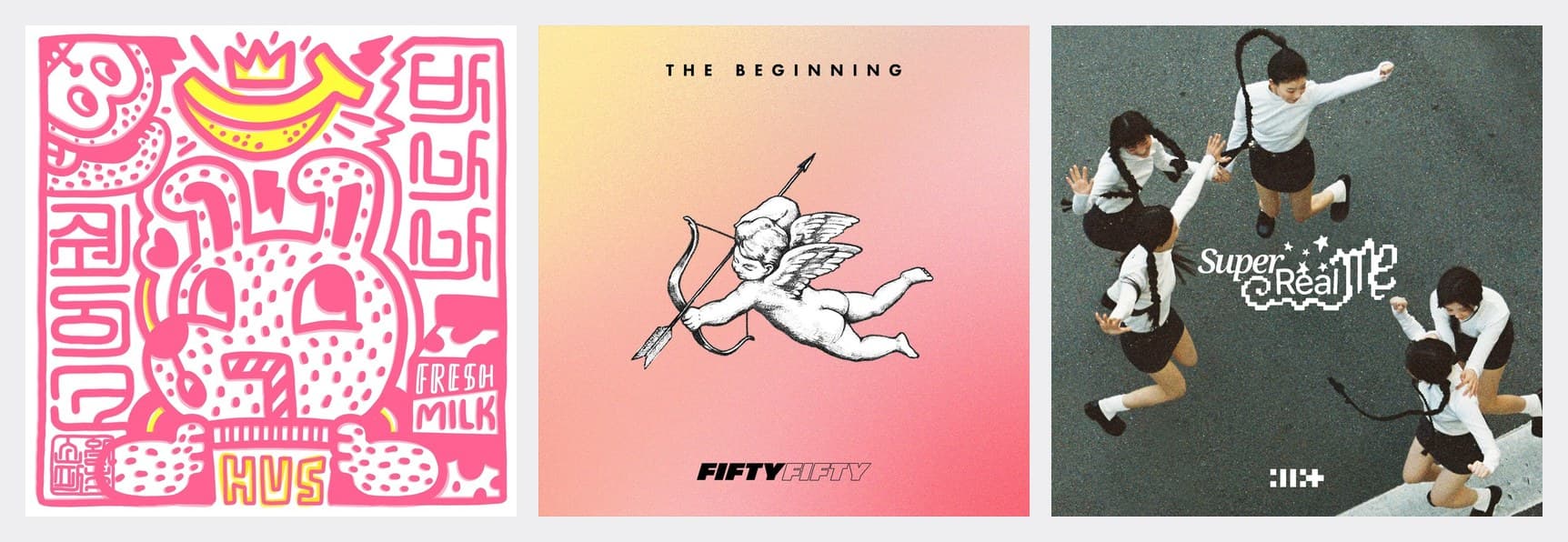
The labels followed soon enough. In February 2023 Warner Music Korea officially released a sped-up version of Humming Urban Stereo's 2004 track 'Banana Shake'. FIFTY FIFTY's 'Cupid' got an official fast version in April 2023 after the TikTok edit took off. In April 2024 ILLIT put out a separate EP with all four songs from its debut mini album edited faster. The variation fans used to make on their own is now a product the labels sell.
So far this is what the music business has always done. Spot what fans are already into, release it officially, earn from streaming. Generative AI changed the question the industry is asking. Beyond selling what fans made, can you charge for the act of changing the music itself? And how does the rights holder get paid along the way?
Paying to Listen, Paying to Make
Paying to listen to music is ordinary now. Paying to make it is not rare either. In February 2026 the AI music generation service Suno announced 2 million paying subscribers and 300 million dollars in annual recurring revenue. There is real paid demand for music-making tools.
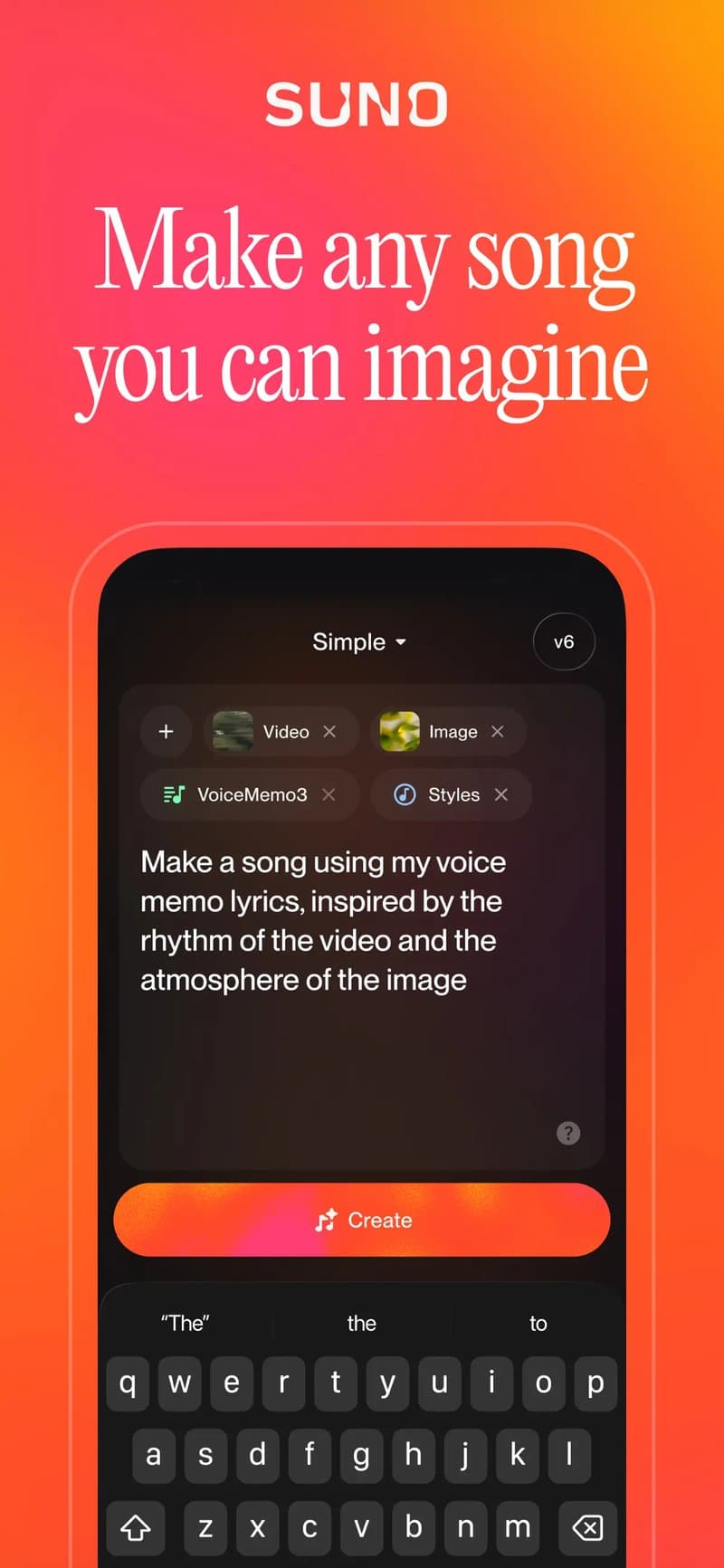
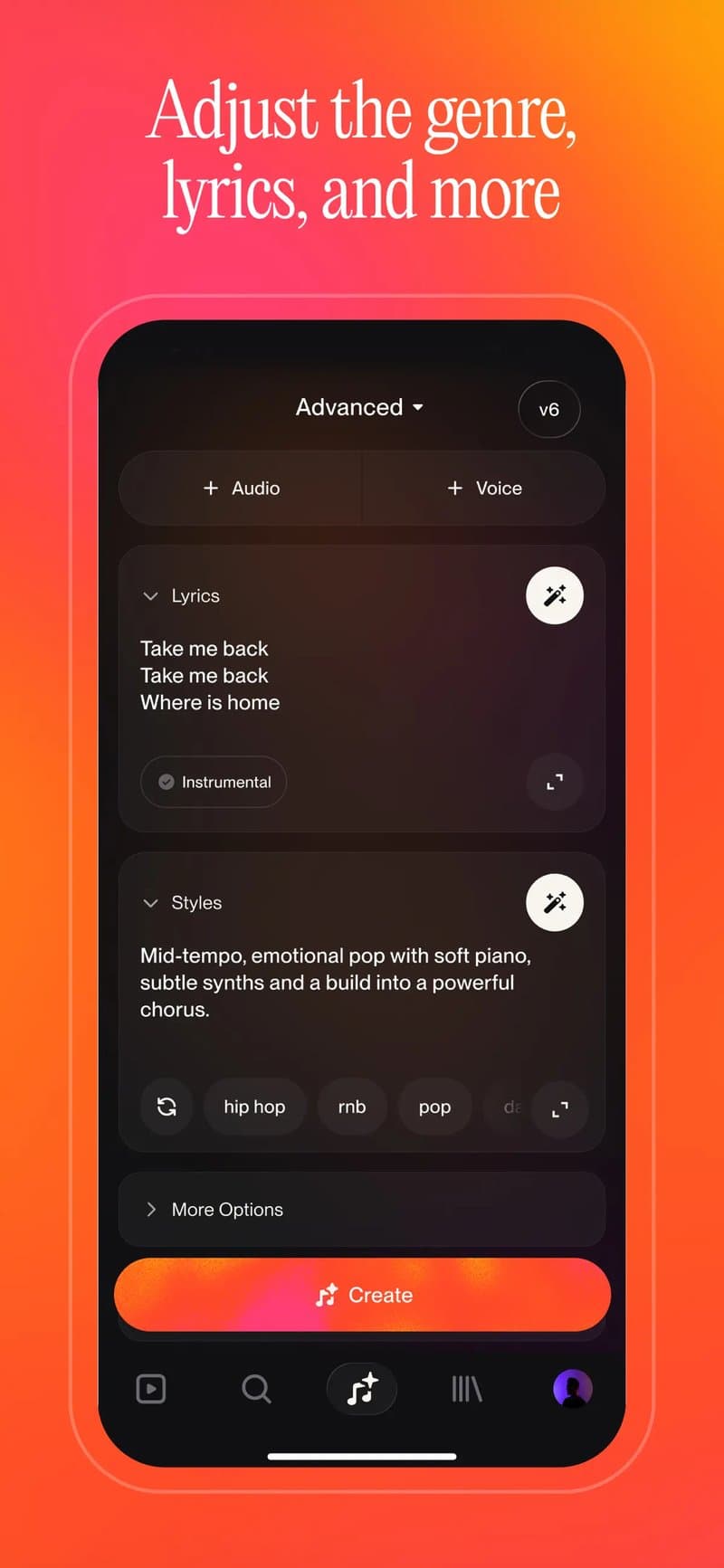
Suno's growth alone does not tell you how big the fan remix market is. Suno users also pay to make new songs with no original behind them. What someone will pay to change an existing song by an artist they love is a different question.
There is data closer to that demand. MIDiA Research asked US respondents aged 16 to 19, and 51% said fans should be able to remix or rework the things they love. 79% showed interest in at least one of the audio manipulation features the survey listed, such as changing lyrics, adding sound effects or adjusting speed. Tatiana Cirisano, who worked on the research, said the appetite shows up most among the heaviest fans.
Saying you want to try something and paying monthly for it are not the same answer, though. Responses from American teenagers do not transfer cleanly to K-pop fandom in Korea. This survey cannot size a market. It only shows what fans might want to do after they finish listening.
The way sped-up edits spread says the same thing. Fans did not stop at listening. They changed the speed, cut out the part they liked, laid it under a video and showed it to other fans. The satisfaction of having handled music you love your own way may matter more than the audio quality or the polish of the result. That is why music-making belongs in the category of fan service.
More Deals, Very Different Permissions
The relationship between the major labels and the AI music companies has shifted too. Copyright suits kept coming on one side while on the other, from the second half of 2025, deals granting the use of existing music piled up fast.
| Announced | Parties | What the deal centers on |
|---|---|---|
| October 2025 | Universal Music Group (UMG) and Udio | Suit settled, development of a licensed music generation service |
| November 2025 | Three major labels and KLAY | AI models and interactive music services built on licensed music |
| November 2025 | Warner Music Group and Suno | Suit settled, artist opt-in AI music models and services |
| May 2026 | UMG and Spotify | Fan-made covers and remixes from participating artists' songs |
| August 2026 | Merlin and Spotify | Wider participation for artists on independent labels |
| August 2026 | BMG and Suno | Use of recordings and compositions, artist consent and compensation |
| August 2026 | Kobalt and Spotify | Songwriter and publisher side rights secured |
| August 2026 | UMG and Hook | Social media sharing of fan creations made from official recordings |
| September 2026 | Believe, TuneCore and Suno | Participating independent artists' music in AI models and new products |
| September 2026 | UMG and ElevenLabs | A new platform for remixes and mashups from participating artists' songs |
More deals does not mean the same business. These need separating.
Suno and Udio started as services for making new music with AI. The label deals are an addition on top. KLAY set out from the beginning to train models on licensed music and let listeners put their hands directly on the music. Spotify and ElevenLabs lead with the feature of letting fans change existing artists' music. Spotify has said it will sell this to Premium subscribers as a separate paid feature.
The closest prior case is Hook. Hook already runs a service for editing official recordings and sharing them on social media. It is not the same as an AI service that generates a whole new song. Still, Hook is the one testing first whether fans will pay to change somebody else's music.
The numbers you would actually need to assess the business are mostly undisclosed. Whether there are advances to the labels, whether subscription revenue gets split, whether settlement runs on generation counts or share counts: there is no way to check. Having a deal and having a business that makes money are still two separate things.
What Hook Showed First
The deal Hook announced with UMG in August 2026 goes past model training. It lets fans make content from UMG's official recordings and post it to approved social media. The two companies worked together for close to two years before the announcement. They said the usage scope came out of what they learned across more than 30 campaigns with UMG artists.
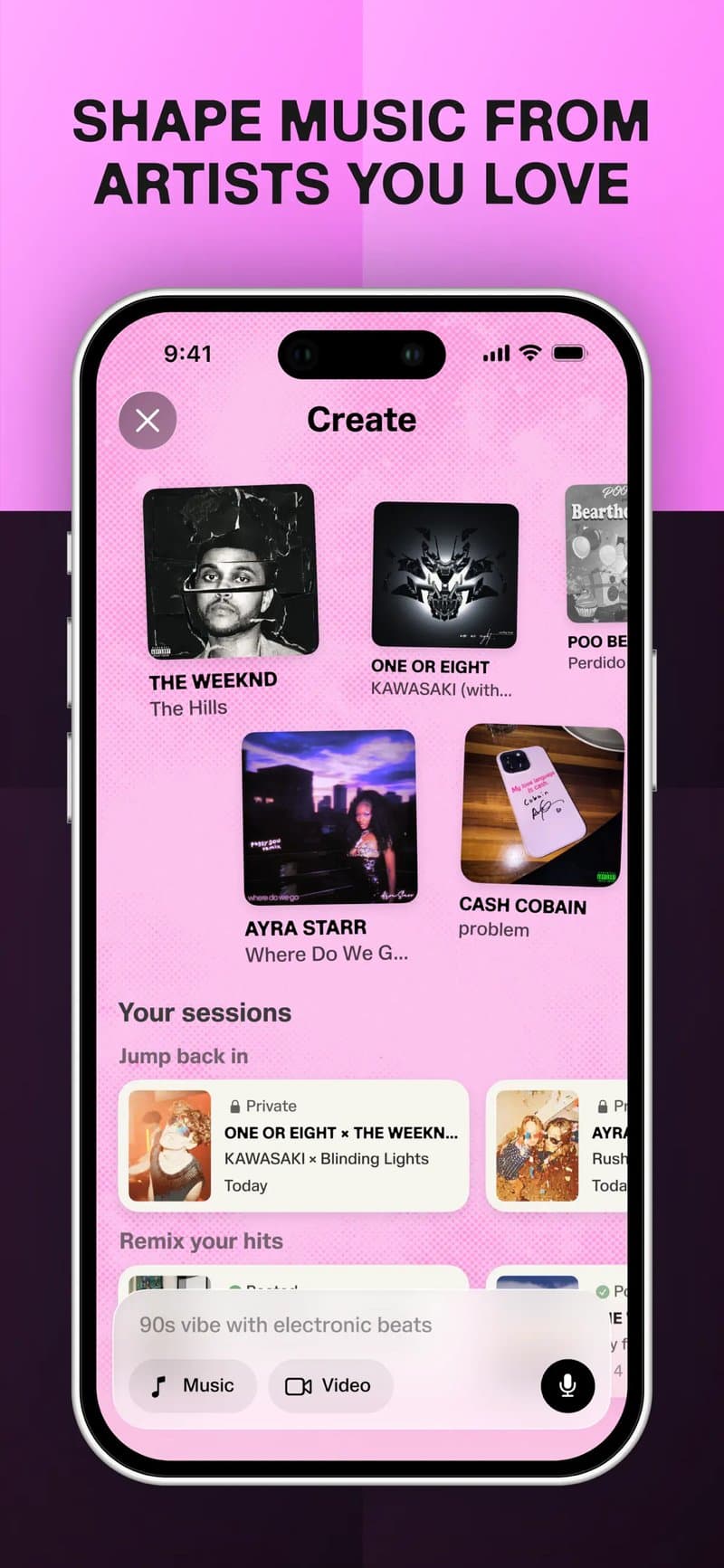
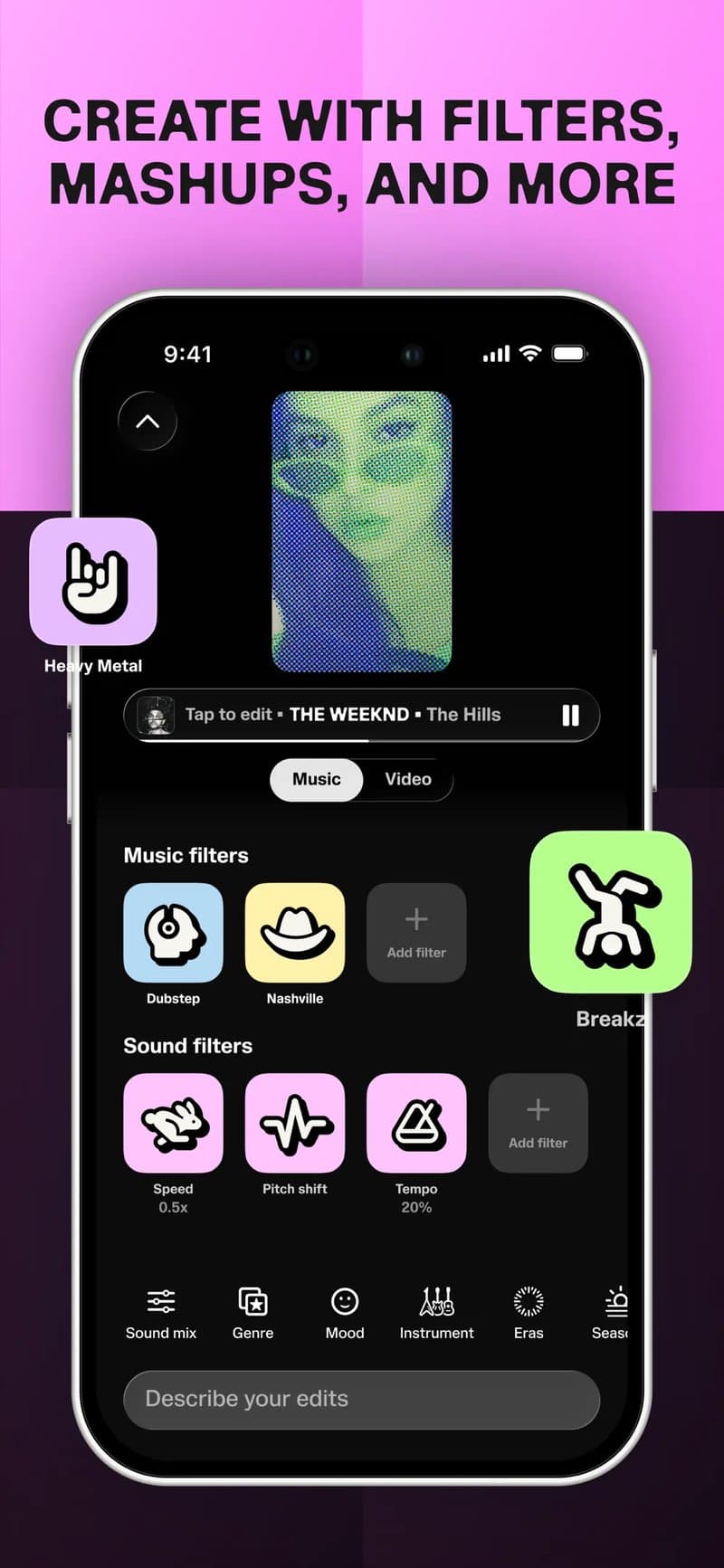
In Hook you select a section of a song and edit it, blend two tracks, or add sound effects and video. The app listing says it offers more than a million official recordings from participating artists and runs a paid tier, Hook Premium, alongside the free features. The monthly price shown on the US App Store is 7.99 dollars. Paying users get looser limits on how much they can make, advanced editing, and sharing without a watermark. The track count and the features are the company's own description. Conversion and revenue are not public.
The choices left with the rights holder are worth attention. Per UMG's announcement, artists and rights holders decide which songs open up, which edits are allowed, and which channels the finished content can go to. Features like remixing, adding effects and making video clips switch on and off individually. Hook says it tracks the usage of each creation and administers what flows back to the rights holder. It has not disclosed the split.
This is a long way from promising that users can make anything. It is a service where you make the content a rights holder allowed, from the songs a rights holder allowed, and share it where a rights holder allowed. Within that boundary, though, the fan does get to take the result outside and pass it to friends.
So the claim that nobody has put a price on the act of fan remixing does not hold. Hook is already moving that way. Hook's editing is not the same thing as generative AI music-making of the Suno kind. Whether this product can be built has been answered. What comes next is how many fans use it again and again, and pay.
Letting People Make, Blocking the Download
The established AI music services moved the other way. They kept the making intact and started restricting the right to take the file out.
Udio stopped audio downloads right after settling with UMG in October 2025. When users pushed back it opened a 48-hour window in early November for pulling down existing tracks, then closed it again. Making and listening inside the service still works. Keeping a copy or distributing it outside is now restricted.
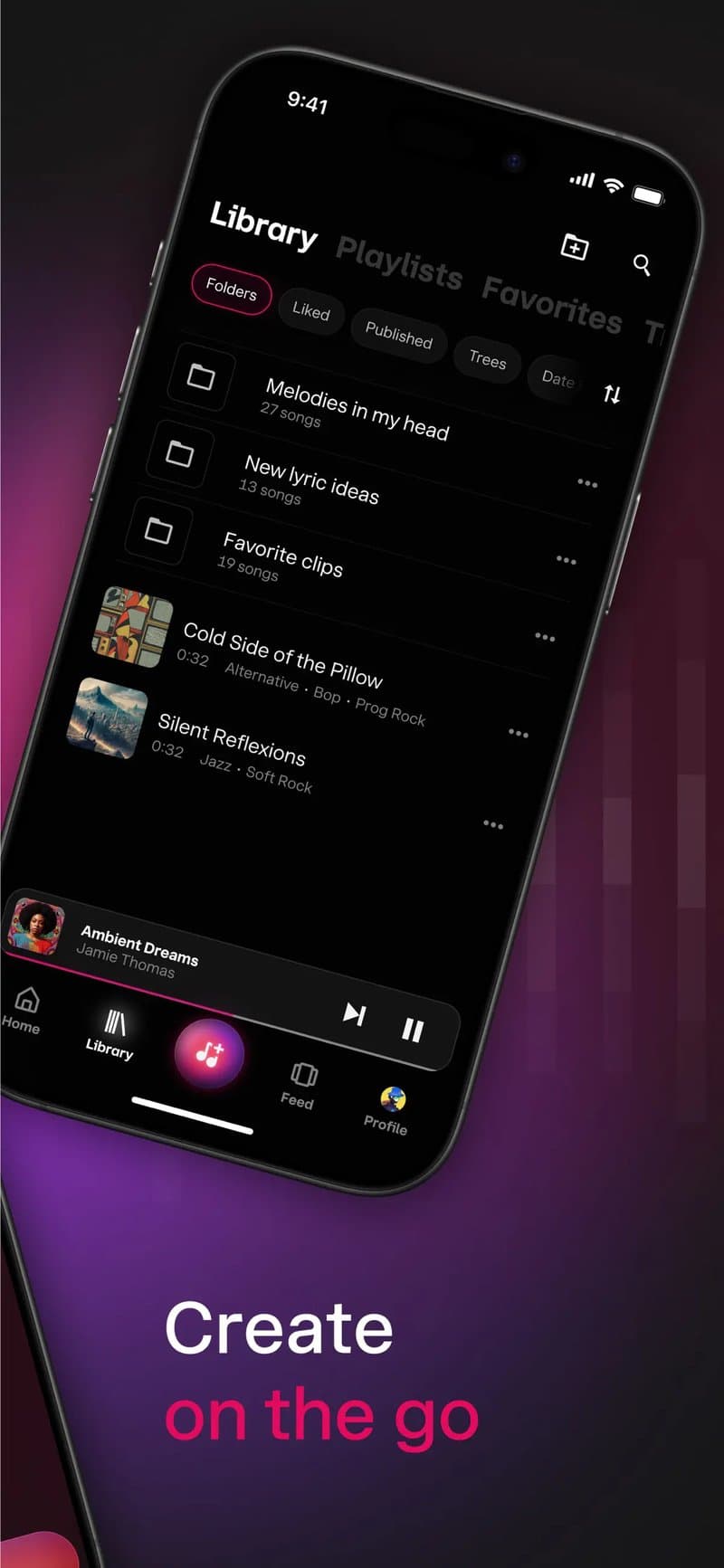
Suno also changed its download rules on September 3, 2026. Pro users get 20 tracks a month, Premier users 60. You can buy more, and work in Suno Studio, the professional tool, falls outside the cap. Re-downloading the same track does not count twice.
Ownership and usage rights need separating here. Suno maintains terms that assign to the user whatever rights Suno holds in what a paying subscriber generates. But it blocked commercial use of anything not downloaded through the proper flow. Whether AI-made music is protected by copyright at all is a separate question from these contractual rights. So saying Suno took away users' ownership of their songs is not accurate.
| Service | What you can make | Public policy on sharing and use outside |
|---|---|---|
| Udio | AI music generation | Audio file downloads halted after the UMG settlement |
| Suno | AI music generation and editing | Download caps for paying users, commercial use allowed for properly downloaded tracks |
| Hook | Editing, mashups and video from licensed official recordings | Social media sharing within what the rights holder allows |
Why the difference? It looks like an attempt to stop music spreading where rights holders do not want it and to keep track of where it is used. Capping downloads also makes outside distribution easier to manage. But nobody has confirmed that the actual contracts calculate fees off download counts. So you cannot call the download cap a way of trimming licensing costs.
A fan who enjoyed changing a song and cannot show the result to a friend is left wanting. Opening every audio file for free distribution is not easy either. Hook and Suno made different choices in between. File ownership, social sharing and commercial release do not have to travel as one permission.
What the Fan Pays and What the Rights Holder Gets Are Different
Now for the flow of money. What you charge the fan and what you owe the music's rights holders are set in two different contracts.
You can charge the fan monthly. Leave basic editing free and put a price on advanced effects, on how much they can make, on removing the watermark. What the platform owes the rights holder, though, could be a flat fee, a minimum guarantee plus a revenue split, or something that scales with usage. Nobody should guess which, because the rates in the AI remix deals are not public.
Precedents from other platforms that use music are worth a look. In YouTube's Creator Music, using a revenue-share track in a video cuts the uploader's share of the ad money. In the official help example, the usual 55% share becomes 25% once one song's rights cost is accounted for. That 25% is not a fixed rate. It is a number offered to show how the calculation works.
When Twitch introduced its DJ Program in 2024 it secured the live-streaming permissions from the major labels and independent rights holders. It designed the music cost carried by earning DJs to be split roughly in half between Twitch and the DJ. For the first year it also subsidized the difference so existing DJs would not see income drop overnight.
In both cases the side splitting the money is a creator already earning from video or broadcast. Fan remixing is a different situation. A fan who changes a favorite song and sends it to a friend may have no ad revenue or tips to split. For them, what they would pay to use the tool comes before what percentage of earnings they receive.

Korean fandom's homma culture offers a hint too. Fans follow concerts taking photographs, pick the good ones, edit them and share them with other fans. Some make photobooks or merchandise. The time and the gear this costs runs far beyond simply listening to music. Fans put serious effort into making something out of what they love.
Photos a homma takes do not each turn into a revenue-share deal with the agency. That does not put the activity outside the record business either. Going to shows, buying albums and trading photos are all tangled together. Beyond collecting a fee on what fans produce, there is business to be found in the act of making it.
That said, the fact that copyright in a homma's photo may sit with the photographer does not make commercial use of the photo free. Using a likeness or a trademark raises other rights. There are no confirmed figures on how much homma activity lifts concert and record spending. So homma is hard to read as a licensing model you could drop onto AI remixing. Read it as evidence of how much fans want to make things.
There Is More Than One Way to Set a Fee
Does the money owed to rights holders have to be calculated per generation? The music business has other methods.
Korean karaoke rooms are charged for music by the number of rooms and the size of the premises. That is not the same as a user paying separately for each song they sing. Karaoke is an industry that spent years building its own collection rules and rights structures, of course, and the rate cannot be lifted onto an AI service. What is worth borrowing is the idea that music can be priced on something other than actual play counts.
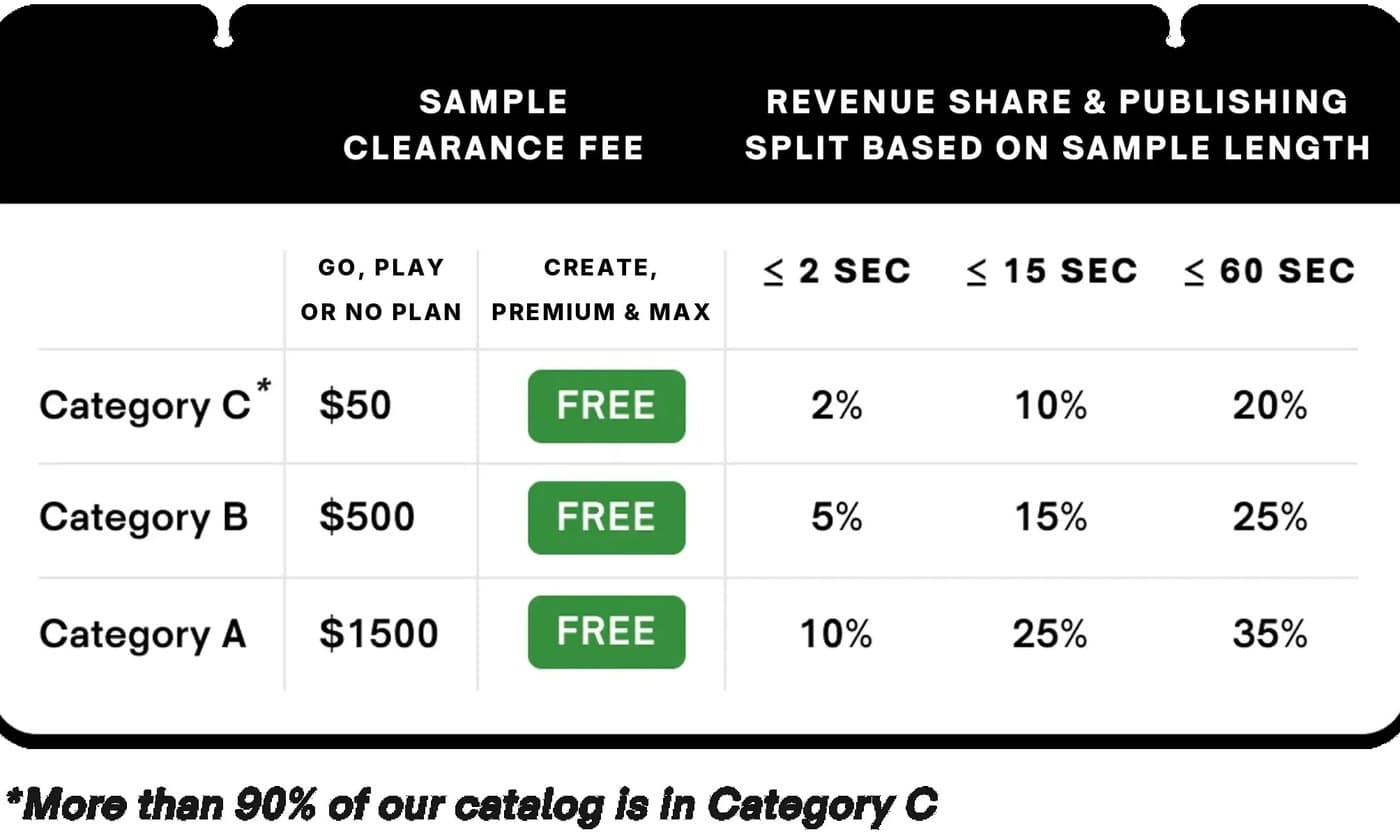
The sample licensing platform Tracklib is another case. A subscription lets you pick pre-cleared recordings to sample, and the company publishes the price as a rate card. Category C, which covers more than 90% of the catalog, costs 50 dollars to clear. The revenue share turns on the length of the sample: 2% up to two seconds, 10% up to fifteen, 20% up to sixty. Category A costs 1,500 dollars to clear and the share climbs to 35%. On the CREATE plan at 8.99 dollars a month the clearance fee disappears and only the share remains. What matters here is being able to estimate the cost before you use it, more than whether the rate is high or low.
Measuring how many seconds of the original you used still does not produce an AI remix fee. Sampling, where you cut and paste part of the original, is not the same as AI reworking elements of the original into a new recording. You have to weigh how the original was used, whether the existing master went in, and where the result gets published.
An AI remix platform has several approaches to consider. It can license a fixed song list for a set period and split subscription revenue. It can set separate rates per song and per feature. It can include private listening in the base license and attach extra conditions to outside sharing or commercial release. Which comes out cheaper is unknowable before you see the contracts. What is clear is that what the customer buys and what the rights holder gets paid on have to be designed separately.
Who Has to Say Yes in Korea
If you build a fan remix service in Korea, the first problem may not be the AI. Opening a single song to fans starts with working out whose permission you need.
First there are the rights in the song itself. Lyrics and composition carry economic rights. Arranging or altering the original brings the derivative work right into play. What a collecting society like KOMCA administers varies by individual contract. Not every alteration can be handled with an ordinary streaming or performance license.
Taking an existing audio file and changing it means looking at the rights in the recording too. Producers and performers may hold separate rights. Recreating a voice with AI means weighing the artist's consent and contractual limits on top of the recording license. The author's right of integrity is a moral right, so it does not disappear because the economic rights were assigned.
| Who to check | Why it matters |
|---|---|
| Lyric and composition rights holders and publishers | Confirm the scope needed to use and alter the original |
| Producers and performers | Confirm permission where the existing master and performance are used |
| Original authors and artists | Confirm separate consent for integrity, voice recreation, likeness and name |
| Platforms and distribution channels | Confirm the scope for file downloads, social sharing and official release |
A song with overseas co-writers and several publishers makes the process harder. Who makes the final call on participating, whether you can proceed when only some rights holders agree, and what happens to existing fan creations if consent is withdrawn all have to be written into the contract. One company signing a deal does not automatically clear rights that company does not administer.
The registration of AI-made music is a separate question to pull out here. In August 2026 KOMCA put in place a standard allowing AI-assisted music to be registered for the part a human substantially created, then withdrew it 22 days later. It also announced procedures for cancelling registrations already filed and holding new applications. That is about how a human creator's rights get recognized and administered in a new song that involved AI. It is separate from getting permission to remix somebody else's existing song. The two can interlock, but solving one does not solve the other.
What Neutune is doing in Korea is also worth watching. The music technology company worked on building AI training audio for traditional Korean music with the National Gugak Center, and in May 2026 it joined DDEX, the international body for music data exchange standards. It is paying attention to systems for tracking a recording's provenance and usage, not only to creation tools.
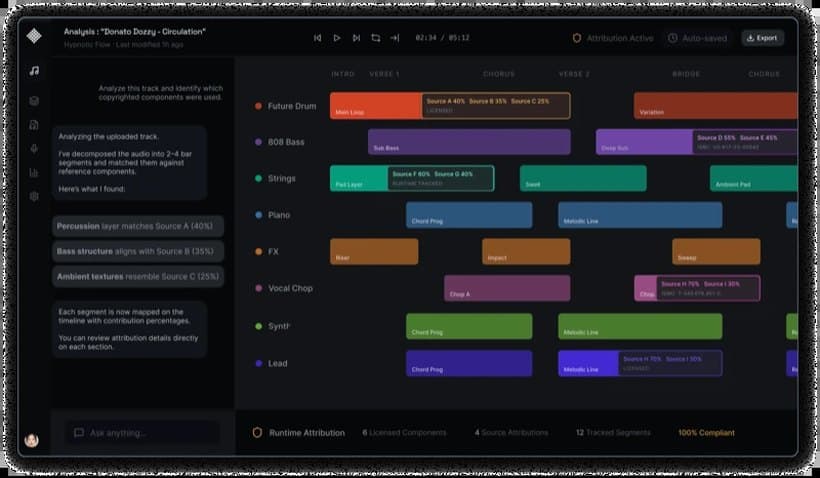
This kind of technical groundwork still does not substitute for permission to remix an existing K-pop catalog. In the end you need a deal on the actual songs you will use.
You Do Not Have to Open Every Song
This is not a business that requires locking down a major label's whole catalog first. Starting small is what makes it clear what you need to find out.
Say a label hands fans a few songs whose rights it has verified. Fans change the speed and the mood, pick the part they like and make a video. The result can be played inside the platform or shared to pre-approved social media. Official release can be gated behind separate permission. Rather than opening everything technically possible, you put the scope agreed with the rights holder into the product first.
The scope breaks into roughly three stages.
| Stage | What the fan may do | What the business checks |
|---|---|---|
| Private creation | Change a song, save it, listen inside the platform | Repeat creation rate and paid conversion |
| Social sharing | Share videos and short remixes to set channels | Share rate, new signups, lift in original plays |
| Commercial release | Download, distribute and monetize after separate review | Extra rights costs and whether settlement is feasible |
The first stage tests whether it is fun enough. You can see how many times the same fan re-edits one song, and whether they pay to reach the advanced effects. The second tests whether the music actually travels inside the fandom. Beyond share counts, watch whether original plays and artist interest rise as a result. The third carries heavy rights and distribution costs, so it does not have to be a launch feature.
The platform's own math is not simple. Something has to be left after AI inference costs, service operations and the money owed to rights holders come out of the subscription. Artists will participate only if the service brings new attention and revenue without eating into existing consumption. Blocking downloads may be the answer, or actively allowing sharing within set limits may work better. Which one is right is unknowable without watching what fans actually do.
Hook built the model into a product. The Spotify and ElevenLabs announcements show the move to pair bigger catalogs with generative features. What nobody has published yet is a case that charged properly and kept settling with rights holders at the same time.
What the sped-up trend showed is simple. Fans do not only listen. They change things and show other fans, and new trends come out of that. For a while the labels concentrated on packaging the results as official products. Now they want to sell the making itself as a service.
Whether a remix feature can be built has been answered. What is left is whether anyone can find terms fun enough that fans pay willingly and safe enough that rights holders open their songs willingly. A small experiment will answer that before a large AI model does. Set the usage scope on a few songs and put them in fans' hands.
Read next
Who Turns On the Lightstick You Paid For?
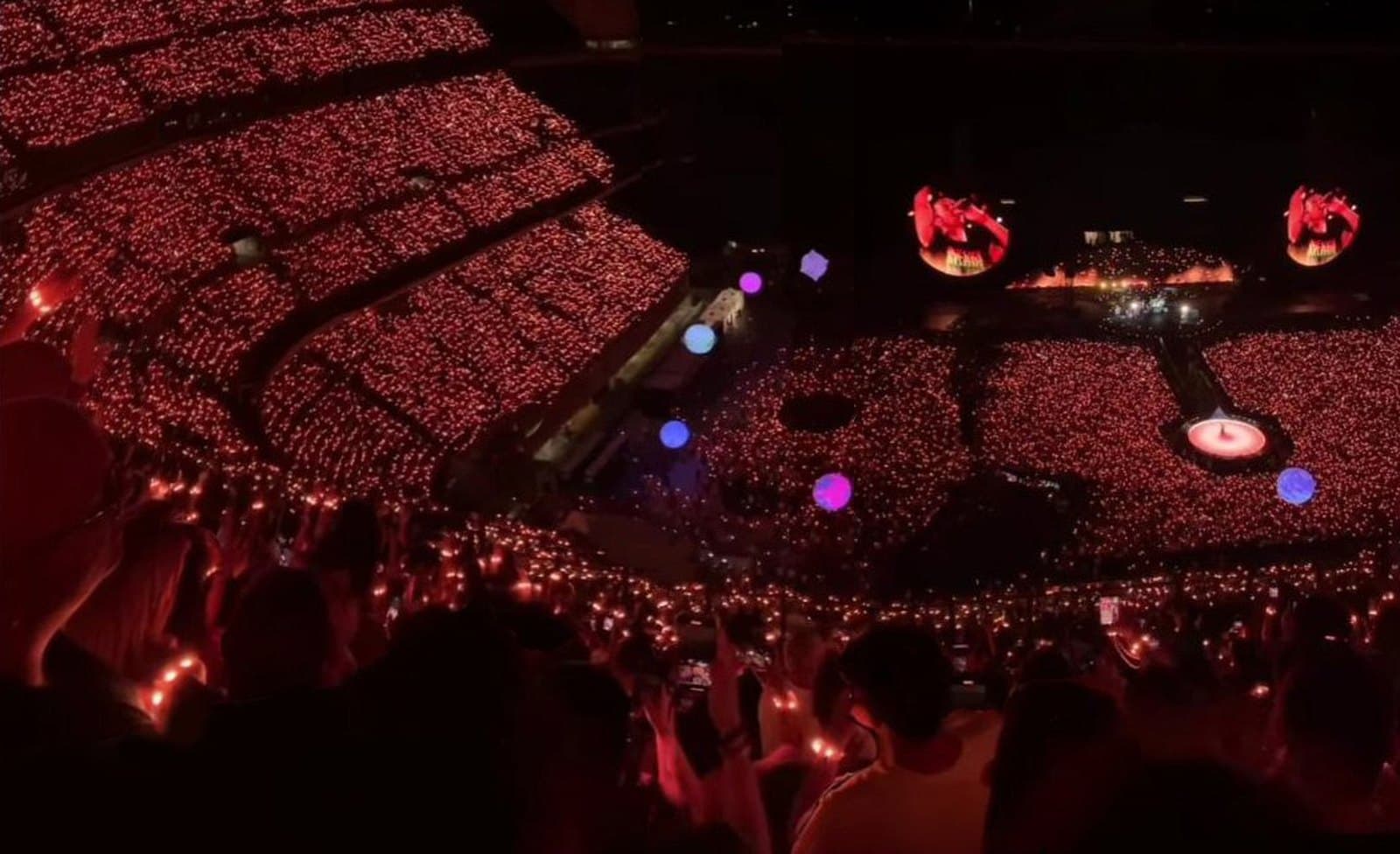
A fan pays 40,000 to 50,000 won for a lightstick; a Coldplay crowd gets an LED band on the way in. The picture in the stands looks the same, but a different party covers the hardware. Depending on the show you may also have to go through the chore of pairing your seat. Through a six-year lightstick patent fight and the Coldplay tour, let's look at who buys the device, who turns the LED on, and who pays for it.
A Sticker Counts as an Album Now
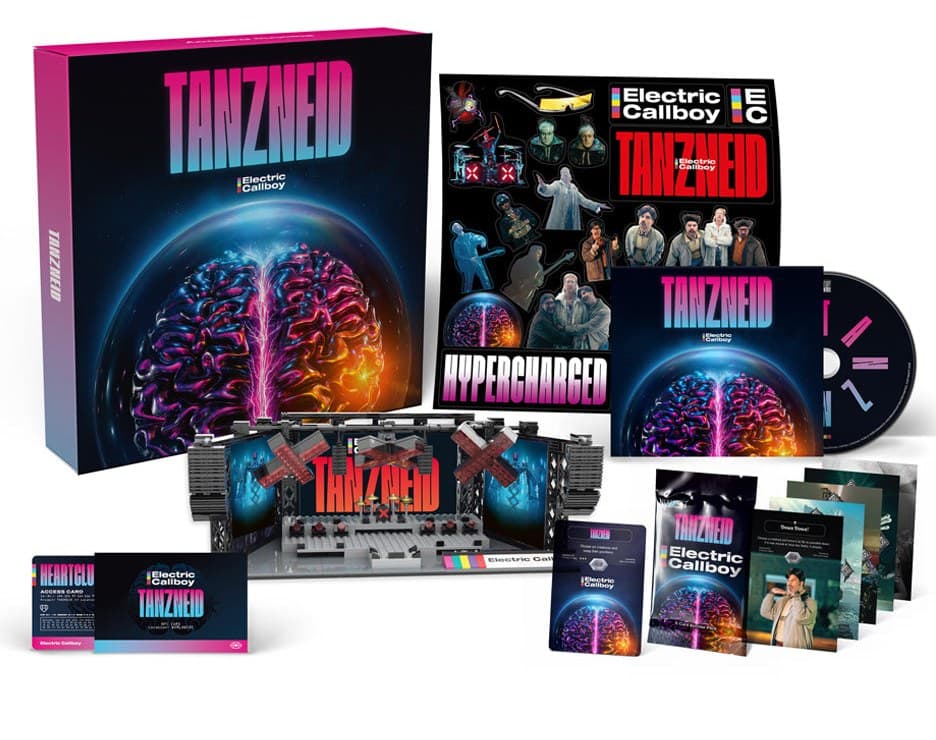
Starting with the October 2 tracking week, Billboard adds a sales format called the smart media album. It is the first new physical category since the CD, forty years ago. Two of the seven vendors Luminate approved are Korean companies. Here is how Circle Chart and Oricon have counted the same object, and what you have to lock down at the design stage if you want to build one.
Previz Comes After the Prompt
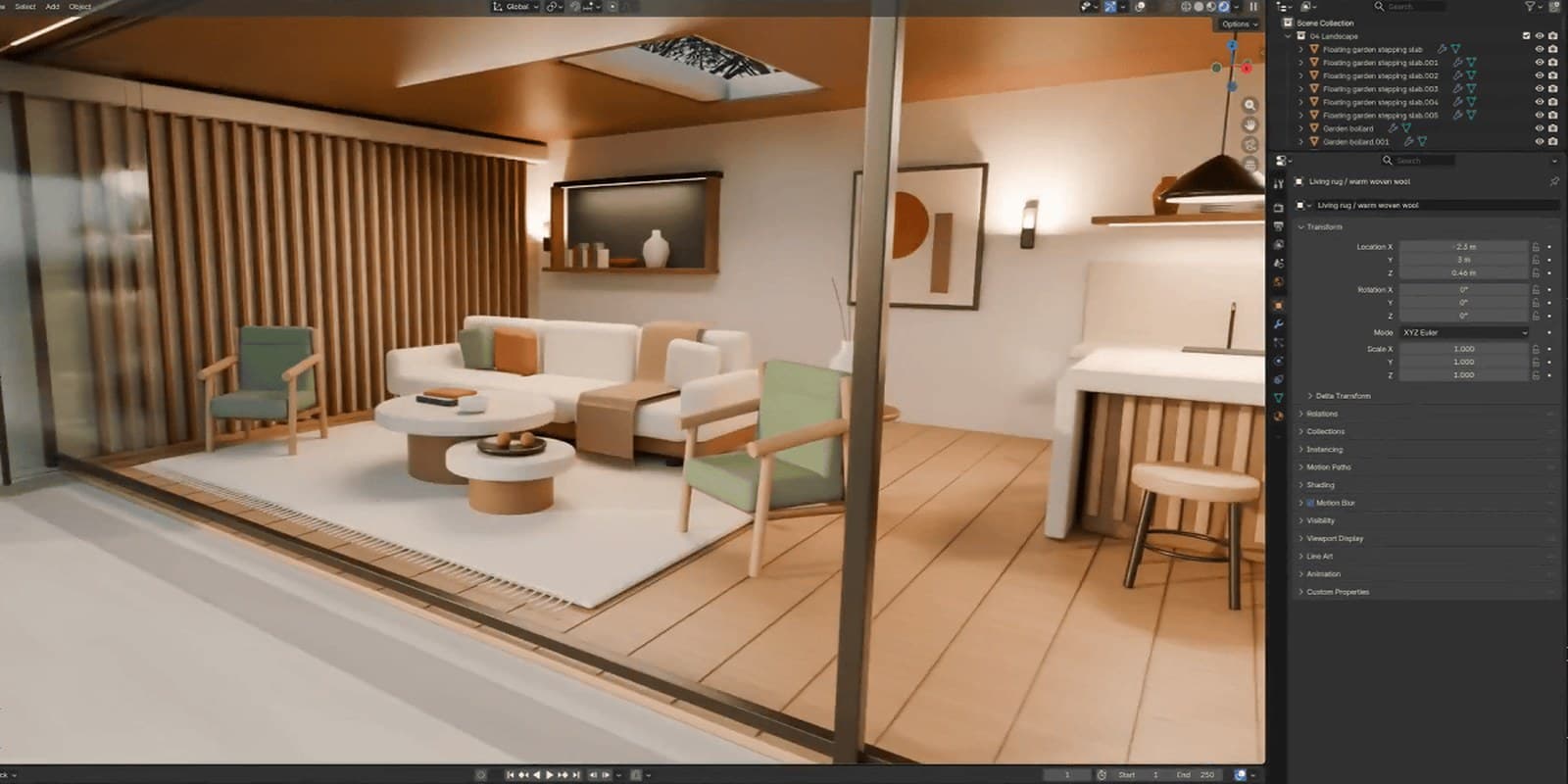
Three things landed in the first week of September. GPT-6 Astra built a house in Blender and moved it into Unreal, Higgsfield bolted a 3D workspace on top, and Images 2.5 got better at holding a reference image steady. String them together and the order of AI video production changes. Here is what is confirmed and what is still a vendor claim.