Previz Comes After the Prompt
Three things landed in the first week of September. GPT-6 Astra built a house in Blender and moved it into Unreal, Higgsfield bolted a 3D workspace on top, and Images 2.5 got better at holding a reference image steady. String them together and the order of AI video production changes. Here is what is confirmed and what is still a vendor claim.
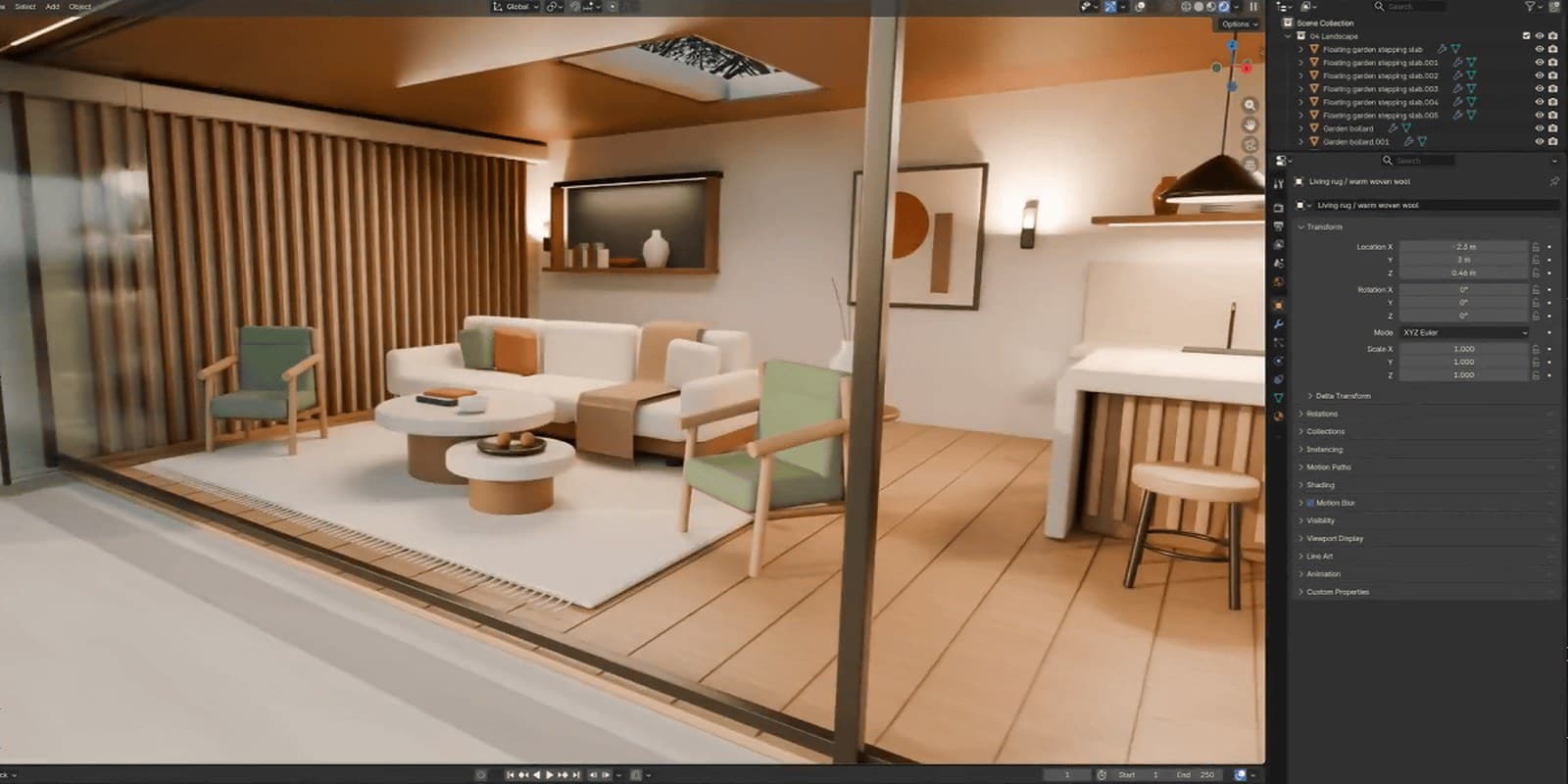
On September 3, announcing GPT-6 Astra, OpenAI put up one demo among others: building a house in Blender and moving it into Unreal Engine 5 as a space you can walk through.
Not the sort of thing you expect from a language model launch. Then the following week Higgsfield and OpenAI shipped two more, and lined up side by side, the three of them turn the production order upside down.
What happened in a week
September 3. OpenAI released GPT-6 Astra. The API model ID is gpt-6-astra, with a 1.05 million token context and 128,000 tokens of output. Input runs $10 per million tokens, output $50. Reasoning effort adjusts across five levels from low to max.
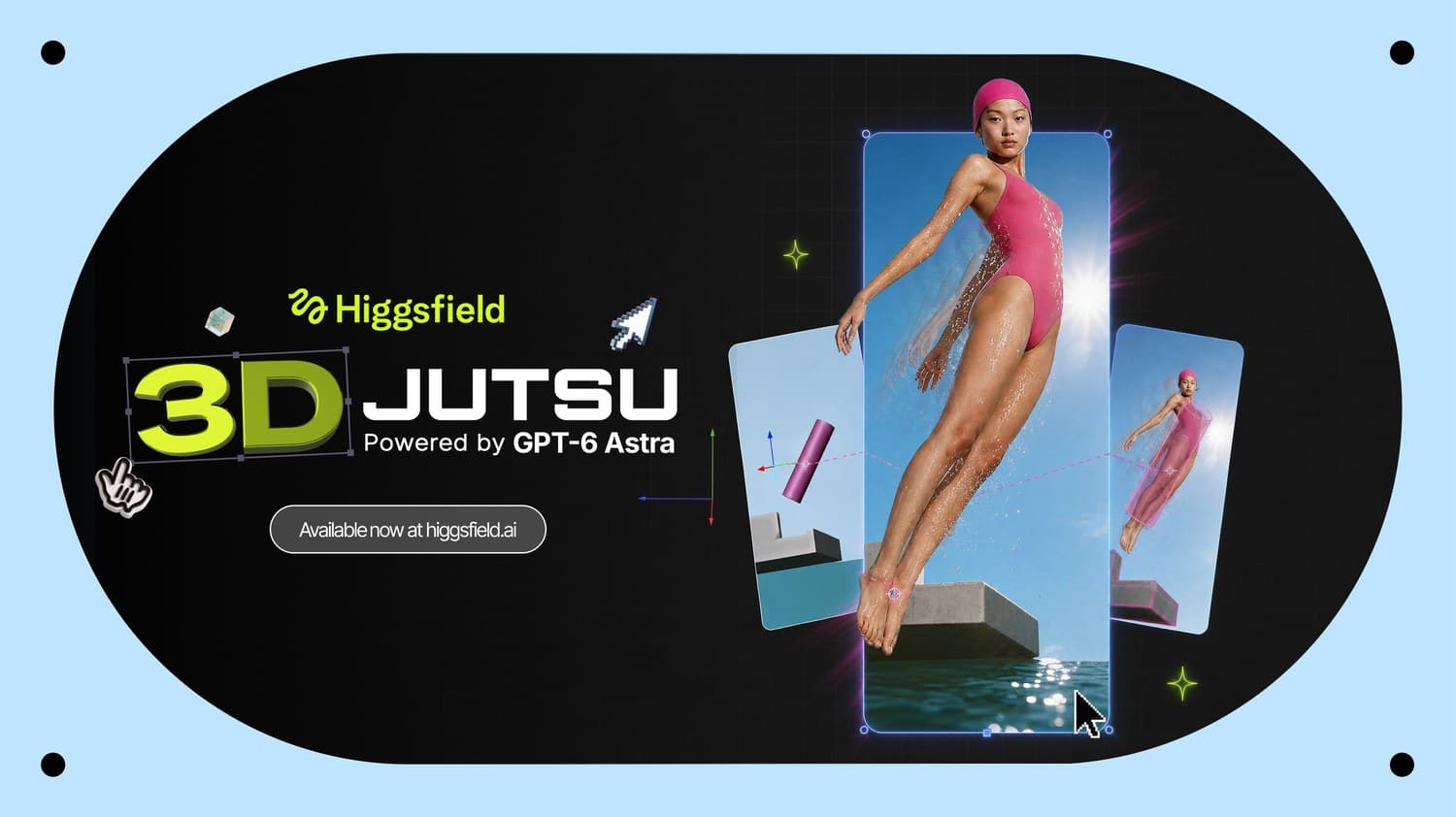
September 4. Higgsfield shipped 3D Jutsu. It builds an editable 3D scene from a prompt or reference material and lets you work on objects, lighting, cameras, and animation. You fix one object without regenerating the whole scene, organize several shots, and render the final video in the same workspace. Astra is one of the model options.
September 8. OpenAI announced ChatGPT Images 2.5. The company says it preserves people in reference photos better, edits only the part you point at, and carries earlier edits forward more reliably across repeated revisions.
String the three announcements together and this pipeline falls out.
Concept and reference images → editable 3D space → previz with camera and blocking → video generation → edit and revise
Until now generative video companies competed on how convincing they could make a single shot. Follow this order and you build the space and the camera before you generate the shot.
How Astra handles 3D
Read Astra as a model that pushes a mesh straight out of a neural network, the way Meshy or Tripo do, and you will miss how it works.
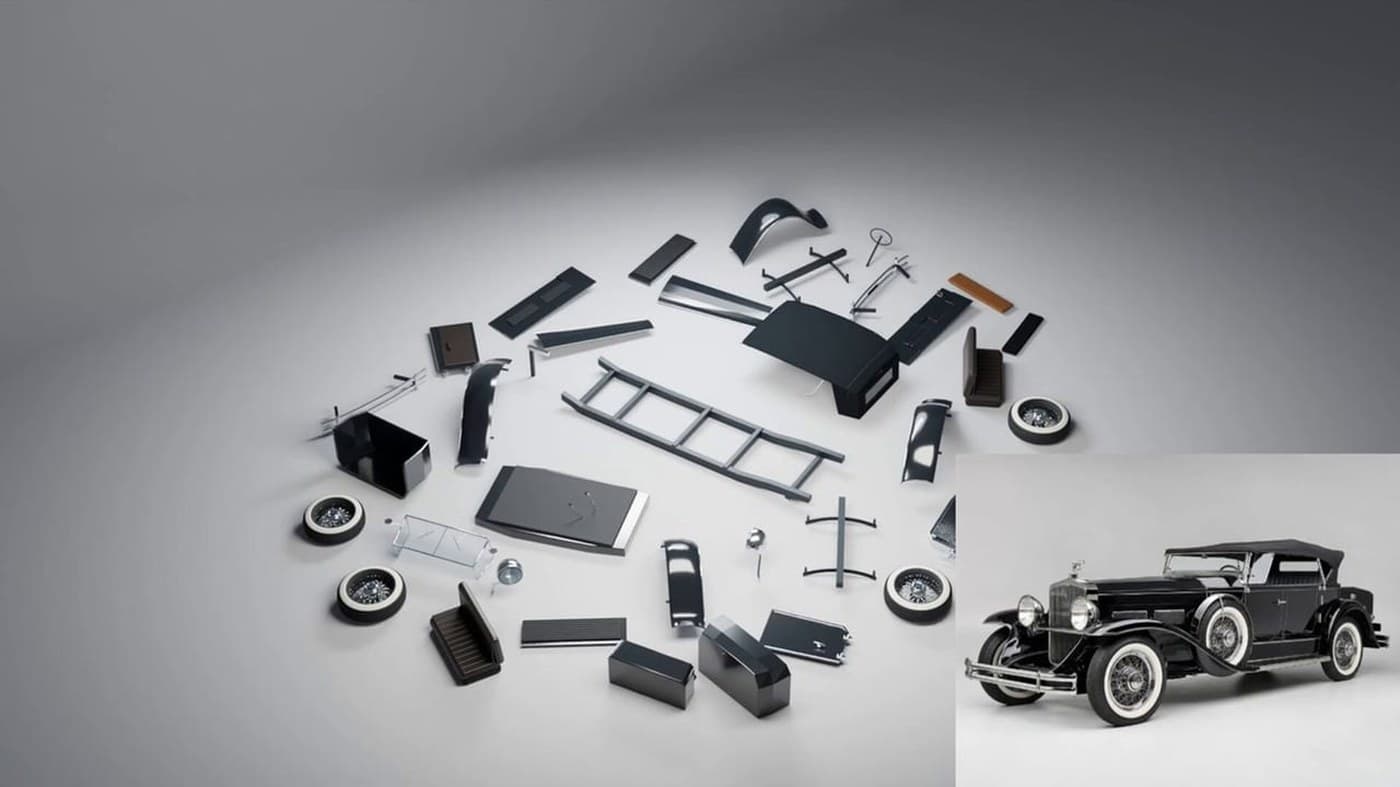
In the published Blender examples Astra writes the code that composes the scene. It creates objects, materials, lights, and cameras through Blender's Python API, looks at the render, and revises. The output does not end at a single frame. It stays a Blender scene.
The starting point differs from a dedicated 3D generator. Dedicated models turn an image or text into a mesh and textures, fast. Astra carries out the production process itself, inside Blender or Unreal. It decides the scene structure, places objects, sets the camera, checks the render, and fixes what is wrong.
So when someone says Astra is good at 3D, reading that as "it invents a new file format" gets it wrong. Read it as "it understands and operates the software studios already run."
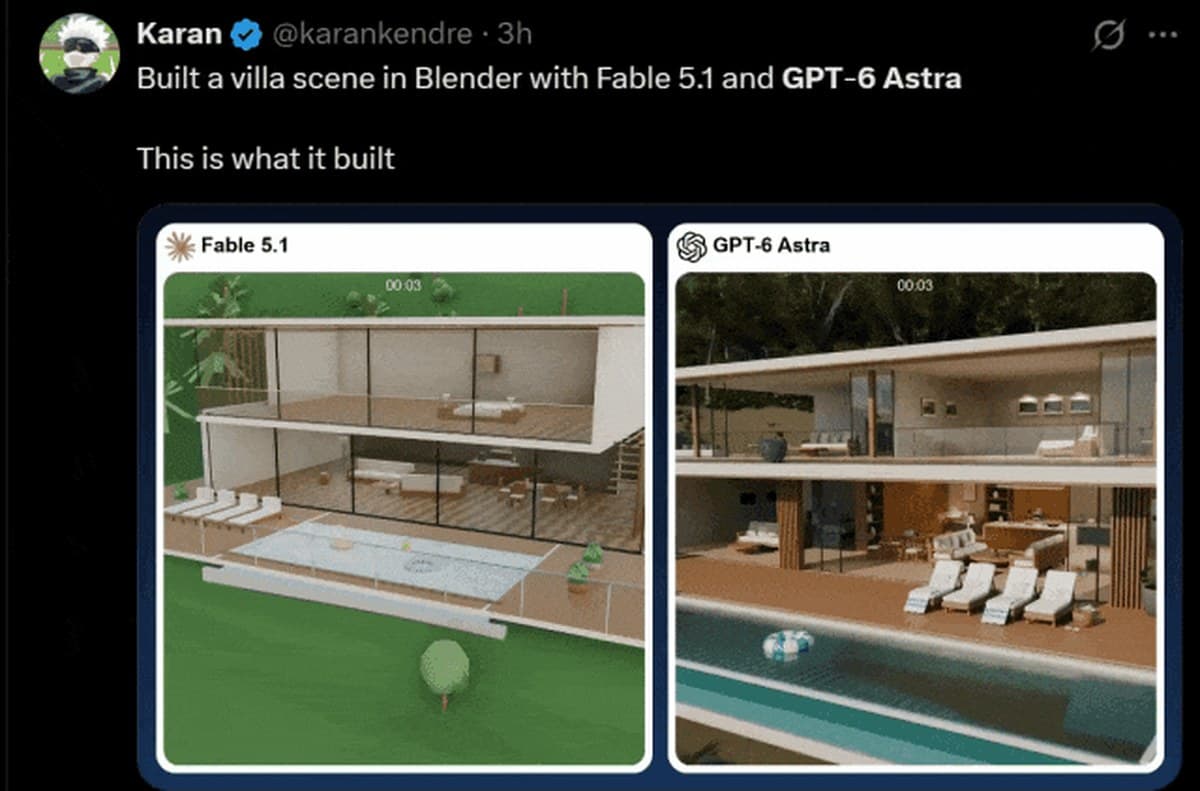
One published build log has Astra exporting a Blender scene to FBX, writing its own tool to record object positions, materials, lights, and camera data as JSON, and then moving it all into Unreal. From the same scene it also produced a 900 frame 1080p video and 4K stills. An individual creator's log does not carry the same weight as an official demo. As evidence that you can build a scene once and reuse it as stills, as video, and as a realtime space, it counts for something.
What 95.9% measures and what it does not
OpenAI announced that Astra scored 95.9% on BenchCAD. On the same table Claude Fable 5.1 sits at 84.3%, GPT-5.6 Sol at 83.3%, and Claude Opus 5 at 82.1%.
The gap looks large. Look at what the test measures alongside it.
BenchCAD is a public benchmark of 17,900 execution-verified CadQuery programs across 106 industrial part families. Give the model images of a part rendered from several angles and it writes CadQuery code. The grader actually executes that code and compares the resulting STEP geometry against ground truth by voxel IoU. That differs from a language model judge eyeballing an answer and assigning a score. On test design alone, it is solid.
Two caveats attach. One, this is OpenAI's number. As of September 10 the BenchCAD team has published no independent rerun, and BenchCAD marks vendor-reported figures separately from its own regrades. Two, the test is narrow. BenchCAD looks at mechanical parts and parametric CAD. It does not measure character faces or hair, organic sculpting, PBR texturing, or animation-ready topology.
So this framing is more accurate. On parametric CAD and program-driven 3D reconstruction, a signal came in that Astra improved substantially over earlier general models. Writing that it beats dedicated tools at 3D quality across the board is something to do after a head-to-head test exists.
What the dedicated 3D tools do
Tripo says Smart Mesh produces a structured low-poly mesh in about two seconds. The P2.0 preview builds native quad topology from multi-view input, with generation times quoted at 10 to 40 seconds. Pricing favors volume: on annual billing the company advertises roughly 200 models at $20 a month and roughly 1,660 at $90 a month, which by its own math is $0.09 to $0.16 per model.
Meshy puts its median image-to-mesh latency at about two seconds as well. It has also been running a 3D agent beta since June: you talk through a concept, get options, convert the one you pick into 3D, and export to FBX, OBJ, or GLB. Astra is not the first company to put an agent on 3D.
Broken out by task, it goes like this.
| Task | Astra with Blender | Meshy, Tripo |
|---|---|---|
| One prop, fast | Slow | Very strong |
| Mesh from a single image | Long procedure | Core feature |
| Low-poly at volume | Poor on cost and speed | Very strong |
| Parametric geometry | Strong signal | Varies by task |
| Laying out a room, street, or full set | Strength | Assemble separately after assets |
| Camera and lighting design | Directly in the scene | Work after handoff to a DCC |
| Editing an existing Blender project | Does it directly | Plugin-centric |
| Predicting per-model cost | Hard | Clear credit structure |
What sets Astra apart is that it does not lock users inside a separate 3D service. It operates the tools a studio already runs and leaves the result in the existing project file. That is the difference between generating and then having a person redo the work in a DCC, and having AI keep working inside the DCC.
Calling the end of dedicated 3D companies is premature. Early cases move toward pairing instead. Tripo began collecting Astra-specific 3D prompts and examples right after launch. Its own guidance recommends building the scene and interactions with Astra, then generating characters and props precisely in Tripo. The most realistic combination right now has dedicated models supplying meshes fast while Astra handles assembly, rigging, camera, lighting, and engine handoff inside Blender.
Why previz
Astra does not produce video files. It still affects video production directly, because of the previz step that sits in front of generation.
Previz means checking the space, the actor blocking, and the camera position and movement in rough 3D before you shoot. Traditional film and advertising used it too, but it cost money and people, so not every project got it.
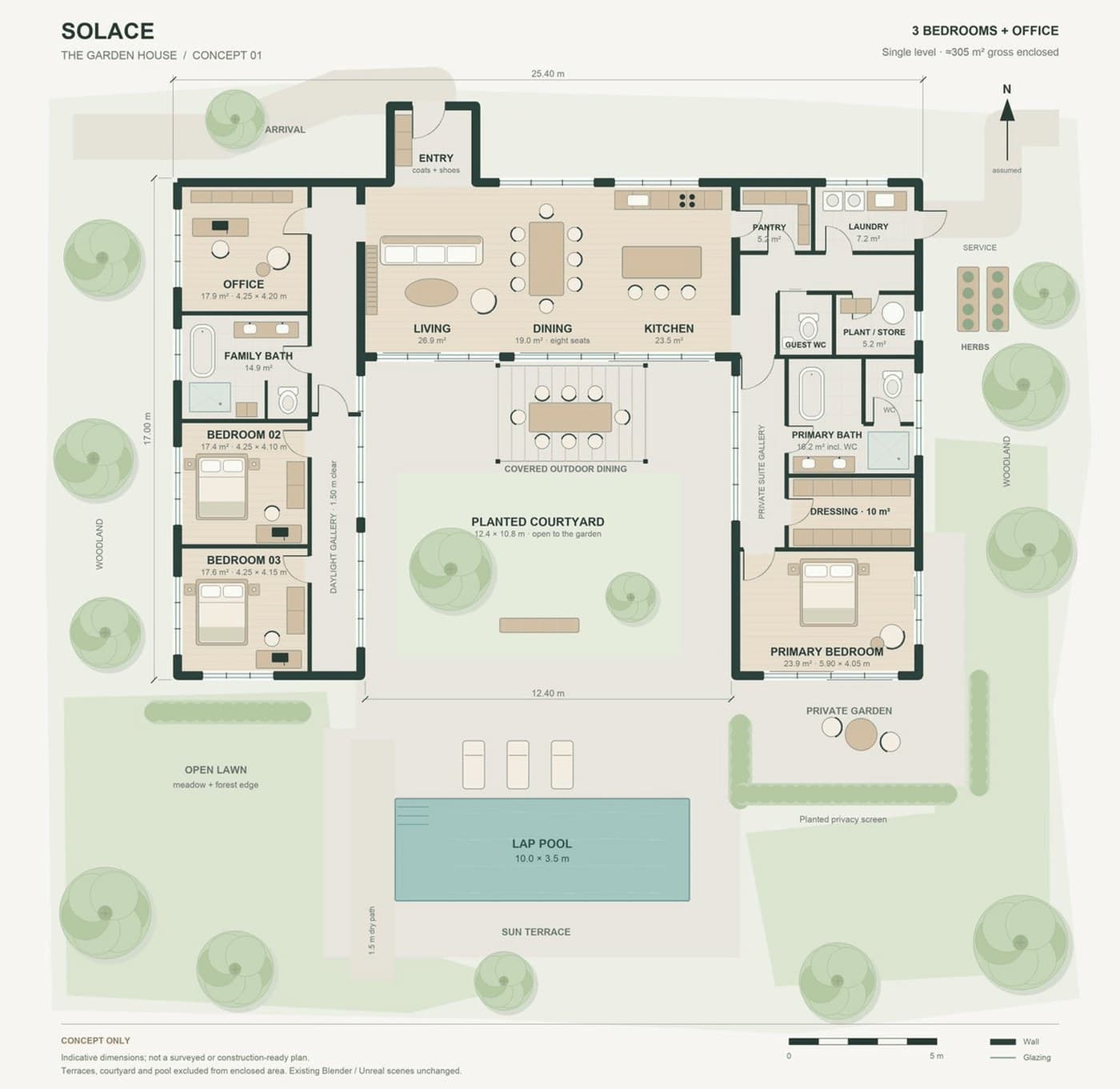
Skipping that step is harder when you make video with AI. Direct the camera and the space in text, one shot at a time, and the positions and blocking drift a little on every generation. Show the same room from several angles, or cut together two people fighting, and the mismatch shows. Set up the 3D space and the camera first and every shot works from the same reference point.
An outside write-up of the swordplay animation demo Higgsfield published shows they actually built it this way. Astra organizes the story, previz gets made in Blender, Seedance 2.5 generates the individual shots, and the results get cut together. Higgsfield claimed characters and locations held throughout. It did not publish the full original prompts, per-shot logs, the edit decision list, or any continuity measurement. Treat it as a vendor demo showing a new production structure rather than a case that proves working performance.
Seedance 2.5 itself fits the flow. Per Higgsfield's official changelog it supports clips up to 30 seconds, up to 50 reference items at once, and regeneration of a selected region. Good conditions for handing camera and position references from 3D previz over to video generation.
What changes when the order changes
Here is how AI video people work now. Start from a concept image, generate video, check for camera and space errors, generate again, match it to the other shots.
Make previz cheap and automatic and there is room to reorder it. Go from the concept image to a 3D space with characters placed, lock the camera and blocking, build previz, generate video, and fix only the shots that need it.
In the second order the 3D scene becomes the project's spatial reference. Swap the video model and the camera and layout data survive. Rebuild a horizontal ad, a vertical short, a product insert, or a night version from the same set and you reuse the scene.
That changes what companies fight over. They fight over who holds and maintains that space before anything gets generated. Quality competition among video models does not disappear. But with Astra operating Blender and Unreal and Higgsfield binding several generation models into one workspace, swapping any single video model leaves the whole production flow intact.
That also shrinks the video model's job. The tool that used to carry the whole production steps back toward being the camera that shoots an already-designed scene.
The game case that went further
OpenAI published a Playco case alongside. Playco's Playbot is a development environment wired directly into Unity and Godot, where the model edits scenes, plays the game to test it, and verifies its own changes. In the published case Playco built a set of differently themed prototypes from a single graybox and reported 50% less manual correction work than with earlier models. That is a company figure from a case study Playco and OpenAI produced together, not an independent experiment.
There is still a reason to connect it to video. If a model can change a scene in a game engine, play it, and check the result, you can build a similar loop for film previz: build the scene, then automatically check camera collisions, characters blocking each other, movement paths, and framing. That is where previz could turn from a gray box drawing into a verifiable production state.
The images that hold up the front end
In video production, image generation is not just the thing that makes the final poster. Character reference images, costume options, location concepts, props, style frames, and storyboards all feed the next step as reference material. If the image model cannot hold that material steady, a person has to re-match faces, costumes, and composition on every revision.
That is the stretch Images 2.5 aims at. Three of the improvements OpenAI listed touch the production pipeline. It keeps more of what makes a person or product in a reference photo distinctive when moving them to a different location and composition. It changes one element, a product or a background or a line of text, and leaves the rest of the composition and brand treatment. It stacks new instructions while holding earlier edits.
For work that revises concept art and character sheets many times over, holding up through the tenth revision matters more than nailing the first frame.
There are two API models: gpt-image-2.5-flare for fast generation and volume work, and gpt-image-2.5-sunburst for iterative editing and precise control. OpenAI says latency dropped by up to 50% against Images 2.0. Adobe announced in OpenAI's post that it is putting the model into Firefly at launch.
A caveat is needed here too. As of this writing on September 10, neither model has appeared on an independent image leaderboard such as Artificial Analysis. Two days after the announcement, that is not strange. But do not write the quality gains and the 50% latency drop as independently verified. The current leader on that board is the previous GPT Image 2 high.
The unit of cost changes
Astra's token pricing is not cheap. Ten dollars per million input tokens, fifty for output. Go past 272K input tokens and the whole request takes 2x on input and cache and 1.5x on output. On unit price alone it is heavy for volume production.
But when you put an agent to work, expensive tokens do not automatically mean an expensive job. If the model finishes without flailing, the total can come down even on pricey tokens.
OpenAI announced that in the BenchCAD setup Astra's estimated API cost ran about 43% below GPT-5.6 Sol and about 86% below Claude Fable 5.1. Higgsfield's CEO also said Astra used up to 20% fewer tokens than other models the company tested on complex creative work. Both are vendor and partner announcements.
What independent evaluation confirms is the performance ranking. On Artificial Analysis's Intelligence Index v4.3 of September 7, Astra max and Claude Fable 5.1 max tied for the lead at 53. Speed varies a great deal with the reasoning setting. Astra max measured about 59 tokens per second with roughly 322 seconds to first token. The medium setting runs about 58 tokens per second with about 7 seconds to first token. Run max at every production step and it is too slow to use. High reasoning effort for scene design and hard fixes, lower settings or a cheaper model for repetitive file operations and simple edits, is the natural mix.
The cost line items a studio watches change too. Until now it was easy to compare the price of one image, one clip, one token. Once an agent works inside a DCC for a long stretch it becomes this: agent runtime to finish one scene, model and tool call costs, retries after failure, human intervention time, video re-render count, and how many times the scene got reused on the next shot and the next campaign.
Build a 3D scene once and reuse it across ten shots and the unit cost falls even if the first scene was expensive. Rebuild the scene from scratch every time and have a person fix the errors, and it gets more expensive than a dedicated generator. No public production data showing this cost curve exists yet.
When unreleased material goes in
Put this stack into a real project at a video studio and unreleased scripts, character sheets, original images, 3D scenes, and contract material all connect to a model.
OpenAI states that it does not train on data from business, enterprise, and API customers by default. API inputs and outputs are generally retained for up to 30 days, and qualifying customers can apply for zero data retention.
One thing is easy to miss here. Add external MCP servers, plugins, and production SaaS and the data crosses into services outside OpenAI too. As covered in the local AI report, terms of service settle things between the company and the vendor, but checking the data flow across the whole toolchain is the studio's job.
OpenAI says Images 2.5 output continues to carry C2PA metadata and an invisible watermark. Lined up against the AI disclosure report, provenance gets embedded in the file at the point of creation.
Sentences not to write yet
This subject is easy to overstate, so here are the lines.
"Astra generates 3D directly." Inaccurate. Astra reads text and images and produces 3D output through existing software and code.
"Astra dominates the dedicated 3D tools." No head-to-head test exists. Meshy and Tripo publish far more concrete production figures for textured organic assets, low-poly meshes, native quads, and volume generation.
"Previz solves AI video's consistency problem." Logically favorable, and the demos are out, but nothing public says shot continuity or regeneration rates improved by any specific percentage.
"AI replaces 3D artists." Early user accounts keep repeating that 3D knowledge is required. When the agent fails to notice an error, a person has to define the problem and set the direction for the fix.
"Images 2.5 is the top image model." Two days after the announcement, there are no independent benchmarks yet.
So what should you try
Video production studios. Start by running previz once and counting regenerations. This exact number does not exist anywhere in the industry. How many times per shot you regenerate without previz, and how many times with it. A studio holding that number negotiates better too.
Advertising and brand teams. Worth checking whether the structure of pulling horizontal, vertical, night, and product-insert versions from the same 3D set actually works. The more formats a single campaign needs, the more the scene reuse pays.
Organizations with a 3D team. Split up in advance what you will hand to a dedicated generator and what to an agent. On current evidence, dedicated tools are faster for props and character meshes, while agents do better on assembly, camera, lighting, and edits to existing projects.
Anyone choosing tools. Measuring with your own work beats a model scoreboard. Pick one scene, build it down both paths, and record time, cost, and revision count. Half a day gets you an answer.
Last thing
Take only the benchmark scores away from this piece and they stop being useful the day the next announcement lands. The rankings will change again.
Look at the pipeline instead of the scores. People have started inserting a step before video generation. Until now you wrote a prompt, got video back, and fixed what was wrong. String September's three releases together and you set up the 3D space and the camera ahead of all that. Hold that space as a file and you keep the camera and the layout even after swapping the video model.
So whichever video model you pick, the video that comes out no longer differs as much as it used to. What changes the video more is who built and holds the 3D space in front of it.
The evidence so far is vendor demos and individual build logs. Nobody has published how many regenerations previz saved, or what one scene cost to build. Whether this order is actually cheaper and faster is something studios will have to count.
Read next
The AI That Never Leaves the Building
Unreleased masters, raw footage, next week's pitch deck. Plenty of companies stall on AI because those files cannot go up to somebody else's server. Here is what one machine in your own office can and cannot do today, and where it lands a year from now.
AI Music Is Getting Tagged. Nobody Can Answer the Question
The global recording industry agreed to tag tracks made with AI, and a declaration field showed up on distributor upload screens. It asks whether you sent the master to a web service and whether a chatbot wrote the first draft of the lyrics, and almost nobody remembers. Across five major Korean music services the question is asked three different ways, and three of them do not ask at all. We followed one checkbox down the distribution chain.

We Asked AI About Our Artists
Ten K-pop teams, four questions each, four conditions, 280 responses checked against a verified answer key. Error rates ran from 3.8% to 40%. The widest gap turned up inside a single model: whether it was connected to search mattered more than which model it was.